
18480.XR6 · Multi-band
XR Series Multi-Band HF Beams XR6 - DXR6 in North America .
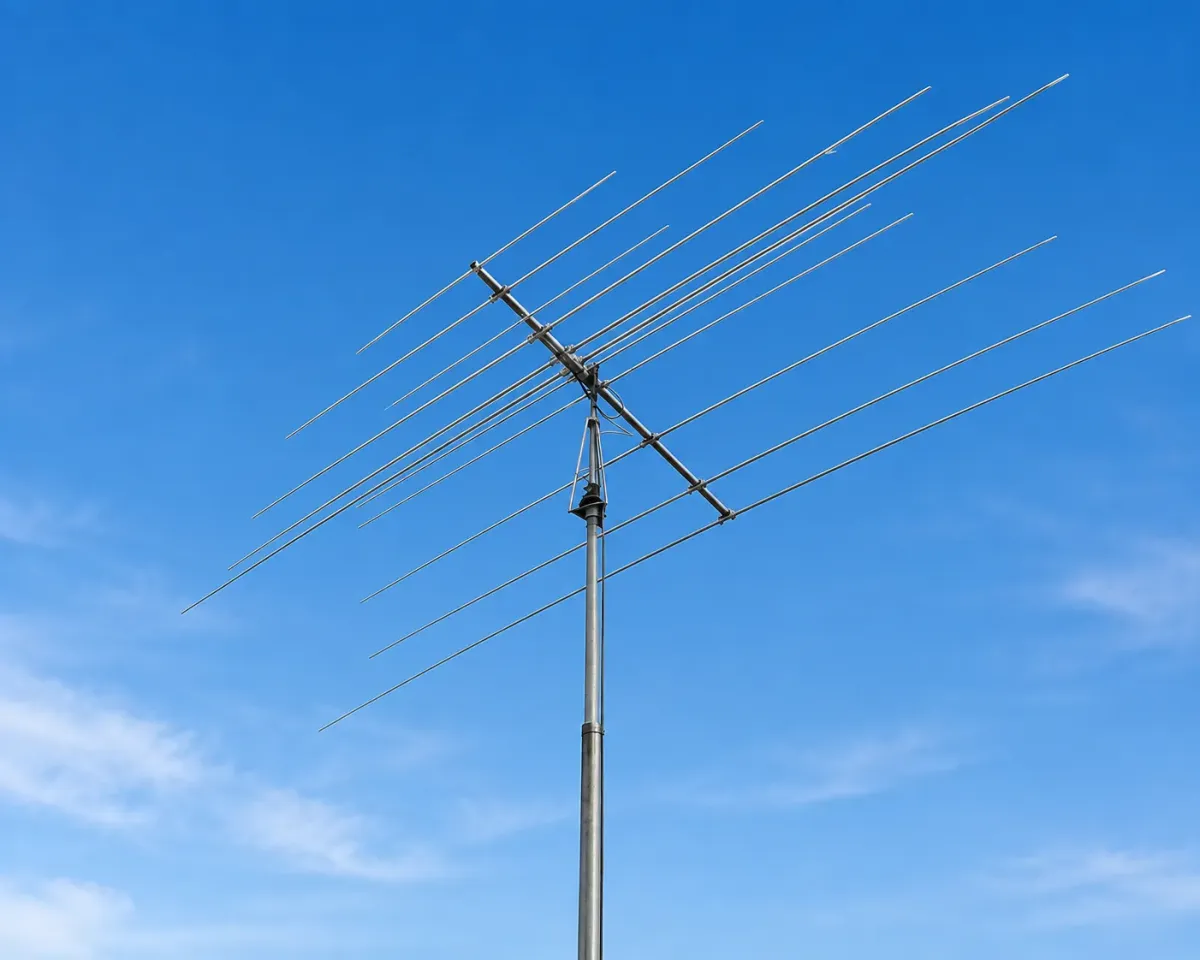
Now, all new XR6 produced are the MKII version of this Compact Yagi that has the 6m band in addition to the traditional five HF bands. Total coverage of 20/17/15/12/10 and 6 meters with a single feedline matches today's HF rigs. Providing two element performance on every band, the XR6 has 11 interlaced elements on a short 11.5 ft. (3.5m) boom, a maximum element length of 38.0 ft. (11.6m) and a turning radius of 19.65 ft. (6.0m). The XR6 is an HF plus 6 meter beam that is easy to install and turn in a limited space. Built to handle high winds up to 107 mph (172 kph), this antenna is also suitable for very demanding locations, such as along a coastline. This is possible with a proven mechanical construction using top-grade materials including aircraft aluminum elements, UV-resistant insulators and stainless steel hardware. The XR6 is a great beam for all casual and DX operators who want to use every band their radio can cover. For situations with even more limited space, this antenna also exists as the XR6C Super-Compact with capacity-hat shortened 20 meter elements.
Available worldwide via authorised dealers
Buy at DX Engineering Buy at WiMo Ask a question about this productDatasheet // full specification
Core
Physical
Electrical
About this antenna
Important features of InnovAntennas XR Series Multi-Band HF Beams:* No traps, matching links or hairpins* Only one feed line for all bands* Careful selection of materials without regard to cost* Very robust construction with still manageable package size
InnovAntennas XR Series Multi-Band HF Beams have short booms with full-size elements or capacity-loaded shortened-elements, all with excellent performance, making them very popular internationally. The DXR Series interlaced-element antennas were optimized by G0KSC over a long period of time to achieve the best possible balance between compact size and performance. For the DXR Series Multi-band Yagis, equal attention was paid to a very solid construction and sufficiently small component and packaging size, to keep shipping costs within reasonable limits.
The XR Series beams use a 1.97 x 1.97 in. (50x50mm) square boom with 0.078 in. (2mm) wall thickness. A square boom has the advantage that the elements cannot twist in the plane. On the other hand, it is slightly heavier than a round boom of the same stiffness. The XR Yagis do not require any bracing of the boom. The longest elements are 1.378 in. (35mm) diameter in the middle and taper relatively quickly to achieve a good compromise between weight and strength. This construction also helps to avoid constant vibration even in light winds.
With InnovAntennas XR series multi-band Yagis, care has been taken to ensure that there are never more than the elements of 3 bands nested within each other. This is because each additional element on one band can cause interference on one band. This negative effect was avoided by careful manual optimization. The result is the best possible matching over a wider band range than other antenna designs. In most cases, no tuner is necessary; the SWR minimum can be precisely set by adjusting the element lengths.
Due to the robust construction and the absence of moving or electrically active components such as coils, traps, hairpins, etc., an InnovAntennas XR beam is maintenance-free for many years. The insulators are UV-resistant and designed for a wide temperature range. The mounting hardware uses sea-water resistant stainless steel and the aluminum is type T6 6066/6082, which is also used in aviation. It's nice not to have to climb the mast every year to maintain the antenna.
The XR Series Multiband beams are designed to require only one feed line. This makes installation on a mast with a rotor very easy. And the use of modern SDR transceivers, which allow the observation of several bands at the same time, becomes really useful. The one feed line is connected directly to the solid distribution rails of the fed elements. By avoiding baluns, matching elements, traps or hairpins for tuning, transmit power is only limited by the coaxial cable and connectors.
Note: Front-to-back ratio (F/B) and SWR bandwidth data for the XR series will be added as it becomes available.
Manuals